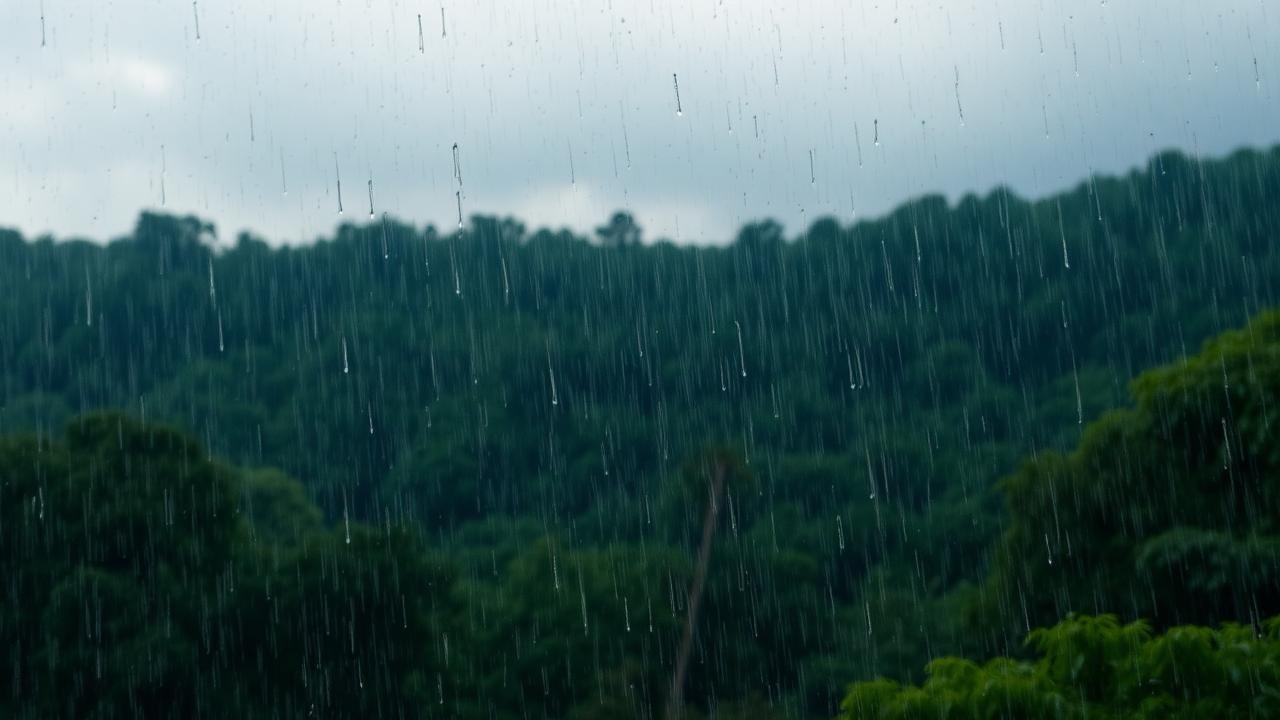
We tend to think of rain as weather — something that happens to us, unpredictable and beyond our control. We check forecasts, carry umbrellas, complain about gray skies. But rain is not random. It follows patterns as rhythmic and purposeful as a heartbeat, and understanding those patterns reveals something profound about the way our planet breathes.
The water cycle, as taught in school, seems simple: evaporation, condensation, precipitation. But the reality is vastly more complex and beautiful. Rain is the product of an intricate dance between oceans, forests, mountains, wind currents, and the rotation of the Earth itself. Every raindrop that falls has been on a journey — sometimes spanning thousands of miles and weeks of atmospheric travel.
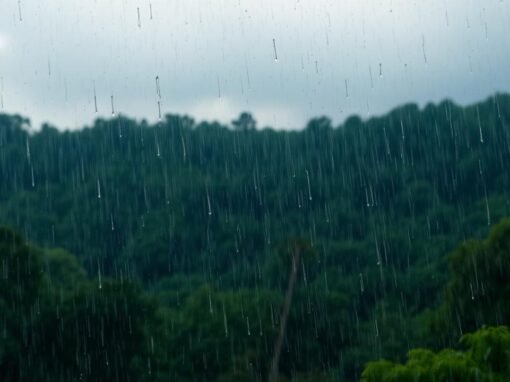
Consider the phenomenon known as 'flying rivers.' In the Amazon basin, the forest itself generates much of its own rainfall. Trees pull water from the soil through their roots and release it into the atmosphere through transpiration — a process so massive that a single large tree can release hundreds of gallons of water vapor per day. This moisture rises, forms clouds, and falls again as rain, often hundreds of miles inland. Without the forest, the rain would not come. Without the rain, the forest could not exist.
This feedback loop — forest creates rain, rain sustains forest — is one of the most elegant examples of self-regulation in nature. It mirrors the concept of homeostasis in biology: the tendency of living systems to maintain stable internal conditions despite external changes. The Amazon rainforest is not just an ecosystem. It is a climate engine, generating and regulating its own weather patterns.
Similar patterns exist around the world. The monsoons that sustain billions of people across South and Southeast Asia follow rhythms tied to the warming and cooling of land and ocean. The orographic rainfall that feeds the rivers of the Pacific Northwest is shaped by the interaction of moist ocean air with mountain ranges. Even in arid regions, rain follows patterns — arriving in seasonal pulses that trigger bursts of life in deserts that spend months in apparent dormancy.
There is a deeper rhythm too. Over geological time, the Earth's climate has oscillated between wet and dry periods, ice ages and warm spells, in cycles driven by variations in the planet's orbit and axial tilt. Rain has been falling on this planet for nearly four billion years, and its patterns carry the signature of deep time — of ice sheets advancing and retreating, of continents drifting and colliding, of atmospheres thickening and thinning.
Indigenous cultures have long understood rain's rhythms in ways that Western science is only now beginning to appreciate. Aboriginal Australians, whose cultural memory extends back tens of thousands of years, possess detailed knowledge of rainfall patterns that has been passed down through generations of oral tradition. This knowledge is not merely practical — it is sacred, woven into stories, songs, and ceremonies that honor rain as a life-giving force.
Today, as climate change disrupts long-established rainfall patterns, understanding rain's rhythm has never been more urgent. Droughts are intensifying in some regions while floods devastate others. The predictable patterns that farmers, ecosystems, and civilizations have depended on for millennia are shifting in ways that challenge our capacity to adapt.
Rain reminds us that we are not separate from the systems that sustain us. Every drop of rain connects the ocean to the mountain, the forest to the field, the cloud to the river. It is a rhythm that we are part of, whether we recognize it or not. And like all rhythms, it asks us to listen — not just with our ears, but with our attention, our respect, and our willingness to live in harmony with forces far greater than ourselves.