The wind is invisible, but its work is everywhere. It sculpts sand dunes and erodes mountains. It drives ocean currents and shapes weather systems. It carries seeds across continents, pollen between flowers, and spores to new habitats. The wind is nature's messenger, and what it carries shapes the world in ways we rarely consider.
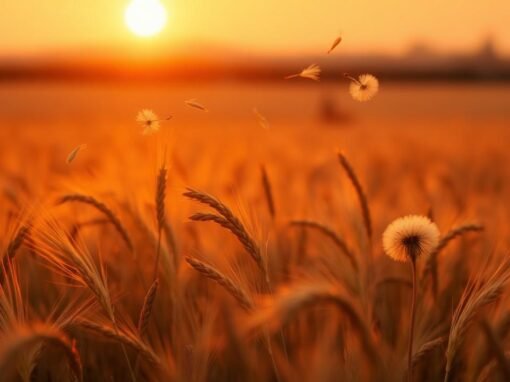
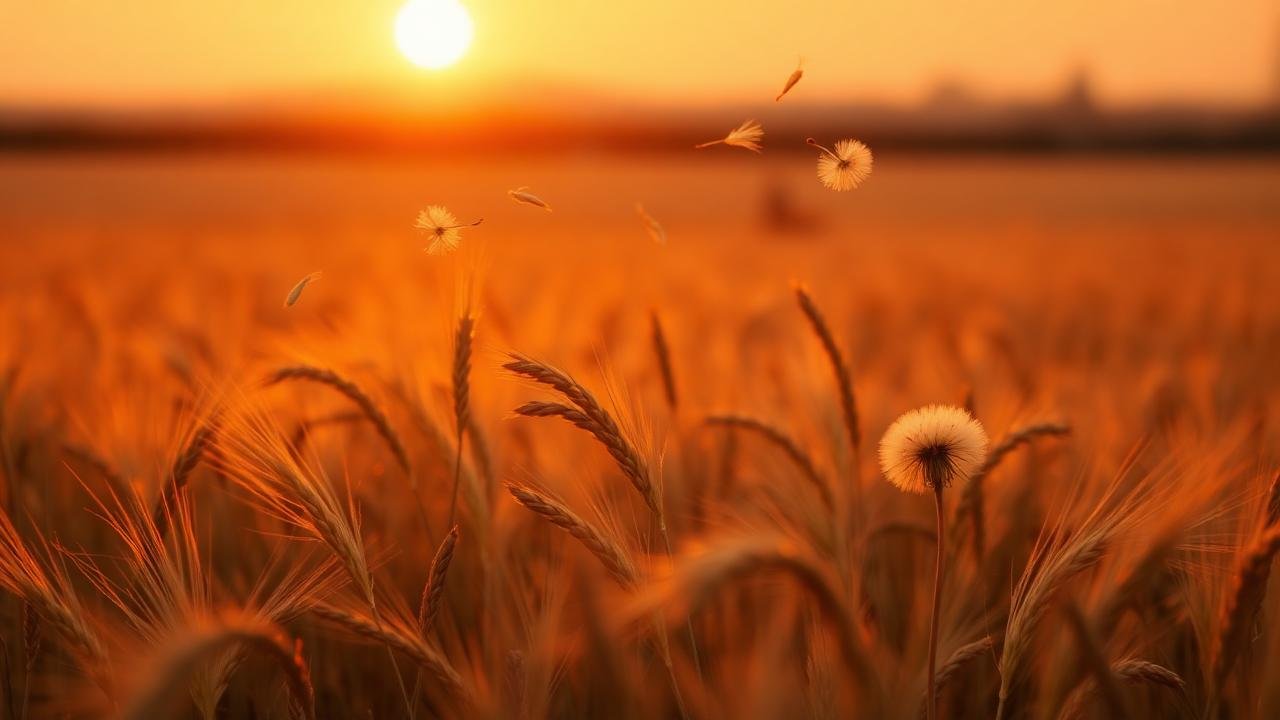
Start with seeds. Anemochory — the dispersal of seeds by wind — is one of nature's most widespread strategies for reproduction. Dandelion seeds float on feathery parachutes. Maple seeds spiral on papery wings. Orchid seeds, so small they are essentially dust, can travel hundreds of miles on air currents. Each of these designs has been refined by millions of years of natural selection, optimized for a specific kind of flight in a specific kind of air.
The distances involved can be staggering. Seeds from the Sahara have been found in the Caribbean, carried thousands of miles across the Atlantic by trade winds. Fungal spores from South America have been detected in the air above Antarctica. The wind does not respect the boundaries we draw on maps. It connects ecosystems that, to our eyes, seem entirely separate.
Pollen is another of the wind's great cargoes. Wind-pollinated plants — grasses, conifers, many hardwood trees — release vast quantities of pollen into the air, relying on chance and air currents to deliver their genetic material to receptive flowers. A single birch tree can produce billions of pollen grains in a single season. Most will never reach their target, but enough do to sustain entire populations.
The wind also carries less visible passengers. Bacteria, viruses, and fungal spores travel the atmosphere in enormous quantities. Researchers have found that the air above our heads is a teeming ecosystem — the aerobiome — populated by millions of microorganisms per cubic meter. Some of these aerial travelers are pathogens, but many are beneficial, contributing to the microbial communities that sustain soil health and plant growth.
Dust is another traveler. Every year, millions of tons of mineral-rich dust from the Sahara are carried westward across the Atlantic, fertilizing the Amazon rainforest with phosphorus and other nutrients. This transcontinental delivery system is one of the hidden connections that sustain the world's largest tropical forest. Without Saharan dust, the Amazon's soils — leached of minerals by relentless rainfall — might not support the staggering biodiversity they harbor.
The wind carries sound, too — and with it, information. Bird songs travel on air currents, warning of predators and attracting mates across distances that would otherwise be impossible. Whale songs, transmitted through water but often initiated by wind-driven surface conditions, can cross entire ocean basins. Even plants, some research suggests, may respond to the vibrations carried by wind, altering their growth patterns in response to the sounds of their environment.
Human cultures have long understood the wind as a carrier of meaning. In many traditions, wind is associated with spirit, change, and the movement of the divine. The Greek word anemos, meaning wind, gives us the word 'animation' — the quality of being alive. The wind, in this sense, is not just a physical phenomenon. It is a symbol of the invisible forces that move through the world, connecting the seen with the unseen.
We live in an age that prizes the visible, the measurable, the controllable. The wind resists all three. It cannot be seen, only felt. It can be measured, but never fully predicted. And it certainly cannot be controlled. Perhaps that is why it has so much to teach us. The wind reminds us that the most important connections are often the ones we cannot see — and that the world is held together by forces that move quietly, persistently, and without asking for our permission.